Who can do without WhatsApp?
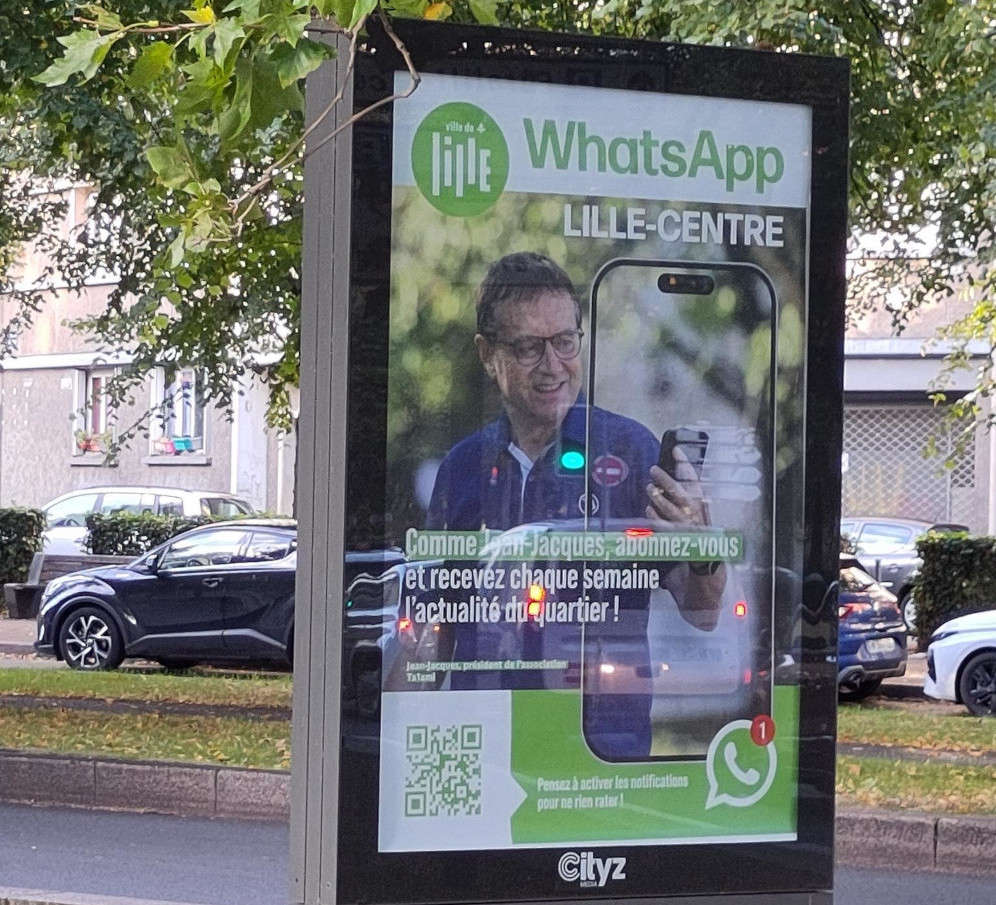
Apparently not the city of Lille. But if we widen the question, hardly anyone, really.
Most of the time, using WhatsApp is a non-choice. It's to keep up with your hiking club. Or the parents' group. Or a weekend with friends. It's hard to organize around an alternative in such small groups, because of network effects. So yes, I gave in and reinstalled WhatsApp recently, after fiercely boycotting it for several years. Some purist free software advocates and "alternuméristes" (people committed to digital alternatives) will swear that for them (in my experience, they are often men) it's a firm no, no WhatsApp, period... But when you dig a little, it turns out their wife (or a relative) is on WhatsApp and maintains the social ties. Or else everyone around them has to make an extra effort to reach them. Either way, let's be honest: that's not satisfactory. As is often the case, digital technology amplifies existing social realities. We know that in couples, it is generally the woman who takes care of maintaining social relationships, a phenomenon documented in sociology under the name of the domestic and social mental load. In short, doing without WhatsApp is fine, but we need to realize that at the individual level it often remains a privilege (of gender, class, economic and cultural standing).
What is particularly dismaying in the case of Lille's city hall is that this is an organization (here, a large local authority) with the means (strategic, financial, human, technical) and the critical mass to offer a credible alternative to a proprietary social network owned by an American company, Meta (you know, one of the most toxic companies on earth). In short, Lille's city hall had a choice between WhatsApp and an alternative, digital or not.
In November 2024, I wrote the following (translated from French):
Let's be clear: the burden of all "digital eco-gestures" should not fall on individual users. This far-reaching reflection on the state of social networks, the design of alternatives, the mobilization required: all of it should be carried by intermediary bodies such as trade unions, political parties, but also the media, public interest organizations, associations, public agencies and European governments. Especially since this is not a new situation. All of X's problems existed before Musk's takeover, which only removed the last safeguards. Dominant social networks have been a democratic problem for a long time (as a reminder, Cambridge Analytica was in 2018), as the French National Digital Council recently pointed out again, having made the courageous choice to leave X and call for the building of European alternatives.
Two years later, nothing has changed. So you may find me harsh, but I believe that choosing WhatsApp when you are a local authority the size of the city of Lille, in 2026 (a pre-election year), is a political and strategic blunder.
If you are an organization and want to take the time to think through a digital strategy that is both ambitious AND acceptable (sustainable, chosen, emancipatory), that is what I offer through Resnumerica. Get in touch :)